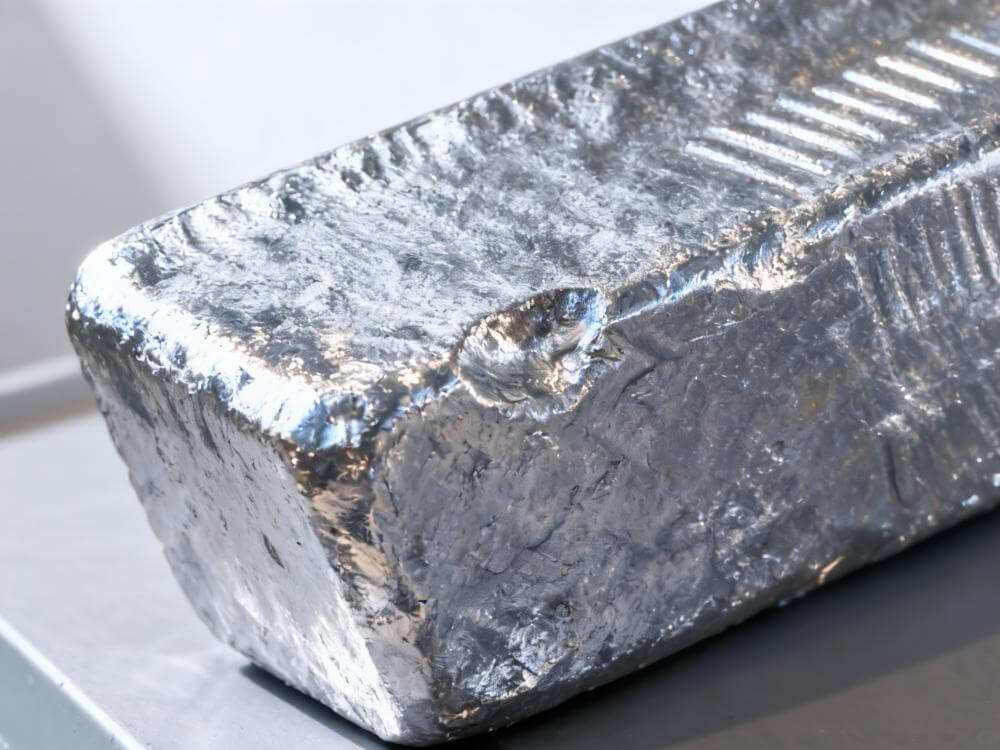
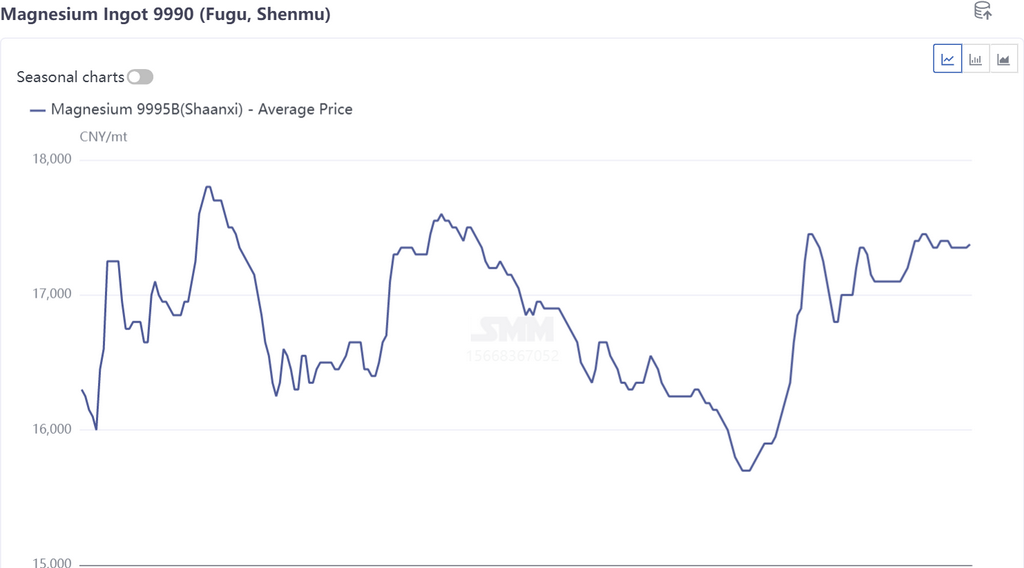
Reviewing recent magnesium market trends, magnesium prices repeatedly tugged within the 16,600-16,700 range, with a relatively slow operating pace. Upstream primary magnesium producers saw declining cost support and had limited willingness to cut prices. In addition, the long-standing inventory distribution pattern in recent periods left limited spot cargo available for circulation, while against the broader backdrop of surging demand in the magnesium alloy market, magnesium plants showed strong reluctance to sell. These three factors together kept downside room for magnesium prices limited. Meanwhile, foreign trade demand faced hindered transportation due to the conflict in the Middle East, and foreign trade procurement orders were hit hard, with the post-holiday wave of foreign trade buying failing to materialize on time. On the domestic trade side, the domestic trade procurement pace remained relatively loose, and no wave of concentrated procurement has yet formed. Judging from recent actual transactions, domestic trade demand only provided basic support to the market, with relatively limited upside drivers. The magnesium market pattern of both weak supply and weak demand left insufficient momentum for one-way price fluctuations.
Geopolitical Conflict Disrupts the Energy Chain, Cost Support Helps Magnesium Prices Hold Up Well
Geopolitical conflict in the Middle East continued to escalate, putting the global energy supply chain under pressure. International oil and natural gas prices rose sharply, driving a rapid release of substitute demand for coal, and stronger coal prices provided strong cost support for magnesium prices. Magnesium smelting is a high-energy-consuming industry, and a rise in coal prices will directly push up the production cost per mt of magnesium, forcing enterprises to hold prices firm and withhold sales. At present, China’s magnesium market has relatively low circulating inventory, and together with a phased contraction on the supply side, the cost-driven effect has been further amplified, so magnesium prices may fluctuate upward. In addition, the geopolitical situation pushed up ocean freight rates, and foreign trade orders declined somewhat, but as ocean freight rates gradually eased, inquiries from the European and Indian markets rebounded slightly.
Demand Exceeds Expectations and Ignites the Magnesium Market, Reluctance to Sell and Speculation Coexist to Reshape Market Logic
The surge in magnesium alloy demand disrupted market sentiment in two ways. First, on the sentiment side, the growth rate of magnesium alloy production in 2025 exceeded expectations, and the medium and long-term view on the magnesium market remained broadly optimistic. Affected by this, primary magnesium smelters showed strong reluctance to sell, making large-scale selloffs of magnesium ingot from the supply side to realize cash unlikely, and keeping the bottom of magnesium prices firm. In addition, the surge in magnesium alloy market demand attracted off-market participants to enter and stockpile, heating up speculative demand. Caution is needed against low-price collapse caused by concentrated inventory selloffs, which could restrain room for a price rebound. Second, on the actual side, the continued rise in output from magnesium alloy producers drove up procurement demand for magnesium ingot, significantly strengthening demand support for the magnesium market.
High Supply Caps Magnesium Prices, With Significant Resistance to Further Rise
Compared with the market in the same period of 2025-2026, primary magnesium production increased significantly YoY by 22,000 mt, and overall market supply was markedly higher than in the same period last year. Although energy and auxiliary material costs remain high at present, smelters are still profitable. According to surveys, mainstream magnesium plants currently have no plans for concentrated spring maintenance, operating rates remain high, and market supply continues to stay loose. Ample supply has become the core resistance currently constraining any further rise in magnesium prices